Empowering Patients Through Knowledge

Our specifically trained Oral Health Educators are committed to preventing dental disease before it starts.
By equipping patients at Heslington Dental Practice with essential knowledge and personalised support, we help you maintain optimal oral health and avoid future problems.
Our highly knowledgeable Oral Health Educators are here to take the guesswork out of your dental routine. We know it isn’t always clear what changes you need to make, so we work alongside your Dentist and Hygienist to offer clear, practical advice tailored to you.
We support patients of all ages – from a child’s first brush to caring for implants or dentures later in life. If you are starting a new treatment plan like braces, we can ease your worries by showing you exactly how to maintain your smile during the process. We also love seeing families! Booking a group session can make dental care feel inclusive and fun, helping your whole household adopt better diet and brushing habits together.
We welcome families from across York, including Fulford, Osbaldwick, Badger Hill and the University of York campus, with free parking outside our Main Street practice in Heslington.
We offer these sessions for just £5 – Every patient takes home a free goodie bag filled with helpful resources & products!
A Guide to Better Brushing
🪥 Mastering Your Brushing Technique
Effective brushing is the foundation of a healthy smile, but it is not just about how often you brush, it’s about how you do it. Many of us fall into the habit of rushing or scrubbing too hard, which can miss plaque or even damage delicate gum tissue. By mastering the right technique, you can protect your enamel, prevent gum recession, and ensure your teeth stay healthy and sparkling between your visits to Heslington Dental Practice.
📐 The 45-Degree Angle
Hold your brush at a 45-degree angle towards the gumline. This is where bacteria love to hide!
🔄 Small, Gentle Circles
Avoid sawing back and forth. Instead, use short, gentle circular motions. Think of it as massaging the teeth rather than scrubbing the floor.
⏱️ Take Your Time (2 Minutes)
Be thorough. Spend at least two full minutes brushing—that’s 30 seconds for each “quadrant” of your mouth (upper right, upper left, lower right, lower left).
🦷 Don’t Miss the Inside
The back of your front teeth is a common spot for tartar buildup. Tilt your brush vertically and use up-and-down strokes to clean the inside surfaces.
🛑 Lighten the Pressure
If your toothbrush bristles look flattened or splayed after a few weeks, you are pressing too hard. A gentle touch is all you need to remove plaque without hurting your gums.
👅 Tongue & Cheeks
Finish by gently brushing your tongue and the insides of your cheeks to remove bacteria and keep your breath fresh.
Choosing the right toothbrush for you!
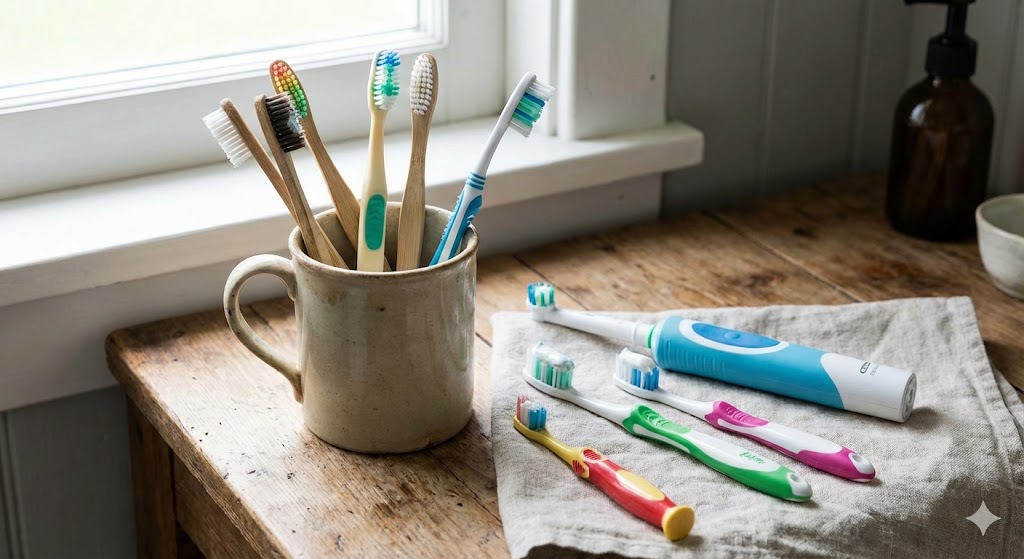
Choosing the Right Toothbrush While there is often debate about whether manual or electric toothbrushes are superior, the reality is that both are effective tools for maintaining oral health when used correctly. Ultimately, the best toothbrush is the one you feel comfortable using daily. Your Dentist or Hygienist can recommend the option best suited to your specific needs.


What to Look For:
- Adults: We recommend a small-to-medium-sized brush head with soft-to-medium bristles (specifically multi-tufted, round-ended nylon filaments). A smaller head allows you to reach all areas of the mouth, particularly the difficult-to-clean back teeth.
- Children: Kids should use brushes with the same soft bristle quality, but with smaller heads proportionate to their mouths.
- Specialised Needs: Modern dentistry offers solutions for everyone. If you have sensitive teeth, look for brushes with extra-soft bristles. For patients with limited dexterity or mobility challenges, toothbrushes with chunky, easy-grip handles and angled heads are available to make brushing more manageable and effective.
Brush thoroughly with fluoride toothpaste twice a day – making sure one of those times is the very last thing at night. If you experience persistent bleeding or discomfort during your routine, please let us know so we can investigate.


