Healthy gums are the foundation of dental health; both are equally vital.
Recognising the early symptoms of gum disease allows for more straightforward, effective treatment.
Unfortunately, most people will experience some form of gum disease during their lives, requiring professional periodontal care.
Gum Disease: The Signs and Symptoms
When affected by gum disease, the tissues surrounding your teeth often become red, swollen, and prone to bleeding. Currently, over 50% of the adult population experiences some form of this condition. While early stages may be mild, advanced symptoms can include a persistent unpleasant taste, chronic bad breath, loose teeth, or the formation of abscesses. Early diagnosis is key to halting progression and ensuring your mouth remains fresh and healthy.
Bleeding when you brush? …… Don’t ignore the signs. We’re here to help you keep your gums healthy and strong!
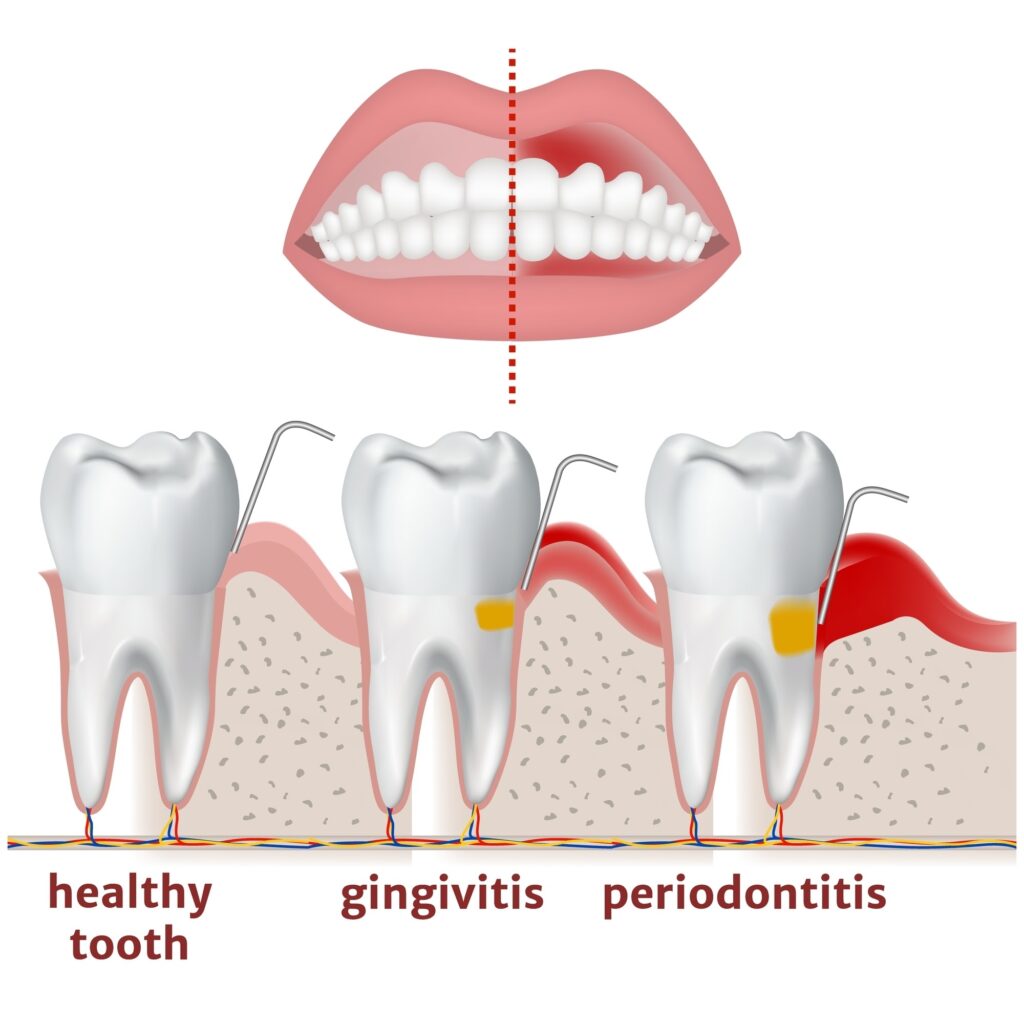
Gingivitis
Gingivitis is the earliest stage of gum disease and is entirely reversible. Common symptoms include red, swollen gums that bleed easily during your daily routine. By staying proactive and addressing these signs early, you can stop the progression of the disease and maintain a healthy mouth.
Periodontitis
When gum disease progresses to periodontitis, it moves beyond the surface and begins to damage the jawbone. While we cannot undo the bone loss that has already occurred, periodontitis can be managed. Through consistent care and proper cleaning techniques, we can stabilise the condition, prevent further damage, and help you keep your natural teeth for as long as possible.
You might notice more severe warning signs like chronic bad breath, a constant bad taste, or even abscesses forming under the gums. As the jawbone weakens, your teeth may become loose and if left untreated, this condition is the leading cause of tooth loss in adults.

Acute conditions
There are other forms of gum conditions which also require management by the dental team. One of these is referred to as Acute Necrotising Ulcerative Gingivitis (ANUG).
This condition is quite rare and is a severe, rapid-onset and painful infection of the gums. In more severe cases it can make speaking and swallowing painful, and even result in a fever. To be diagnosed with ANUG, a patient typically presents with these three distinct symptoms:
- Severe Pain: Intense, sudden gum pain that makes eating or even talking difficult.
- Spontaneous Bleeding: Gums that bleed heavily with almost no provocation (sometimes even without brushing).
- “Punched-Out” Ulcers: The small triangles of gum between your teeth (papillae) look like they have been eroded or “punched out,” often covered by a greyish-white film of dead tissue.
What Causes Gum Disease?:
Plaque is the main culprit behind gum disease. It forms when bacteria in your mouth mix with debris from food and drink, creating an acidic layer on your teeth. If brushing isn’t done thoroughly or often enough, including the use of interdental aids like Floss and Tepes this plaque builds up and begins to irritate the gums.
When plaque is left for a period of time it hardens into Tartar; Think of tartar as “fossilised” plaque. Once it hardens, it can get under the gum line and cause inflammation that a toothbrush alone can’t fix. Beyond hygiene, your overall health plays a huge role; factors like smoking, stress, and diet – as well as life stages like pregnancy or conditions like diabetes can significantly increase your risk of developing gum disease.
We can help you tailor your tooth brushing technique and find the right interdental aids for you. This will make sure you can keep on top of the plaque around your teeth.
We can arrange a one-on-one appointment with one of our professional Oral Health Educators who are here to offer practical tips and guidance to make your home care easier.
What Happens if Left Untreated?:
Don’t let a reversible problem become a permanent one. If plaque and tartar aren’t professionally cleaned away, gingivitis will progress into periodontitis. The stakes are high: unhealthy gums are a leading cause of tooth decay and tooth loss. This is why our team focuses so heavily on preventive care, we want to help you keep your natural teeth for a lifetime.
Failing to treat gum disease can lead to further health complications, such as:
- Bone loss: Damage to the jawbone and the sockets that hold teeth in place.
- Tooth loss: Teeth becoming loose and eventually falling out due to a lack of support.
- Recurrent abscesses: Painful infections along the gum line.
- Receding gums: Gums pulling away from the teeth, causing sensitivity.
Who is at Risk of Gum Disease?:
Almost every adult in the UK will suffer or have suffered with gum disease because everyone is at risk!
Your oral health is closely linked to your overall well-being and understanding these risks allows us to create a more personalised care plan for you. Factors that increase your risk for gum disease include:
- Medical History: Diabetes, heart disease, family history, or a weakened immune system (this might be due to another condition).
- Lifestyle: Smoking, high stress, and poor nutrition, malnutrition.
- Medical Treatments: Certain medications or cancer treatments.
- Pregnancy: Premature labour and having a baby with a low birth weight.
FAQ’s:
Why is Smoking a Risk Factor? –
Smoking interferes with your body’s ability to heal and fight infection. By weakening the immune response, smoking allows gum disease to progress more rapidly and makes treatment less effective. If you smoke, regular dental check-ups are even more vital to catch “hidden” symptoms early.
I use mouthwash—isn’t that enough? –
Mouthwash alone won’t prevent gum disease. Because plaque is a sticky film, it must be physically brushed or flossed away. That said, using an antibacterial mouthwash alongside thorough brushing and flossing can provide extra protection by targeting bacteria and helping to keep your mouth healthy.
Antibiotics and Gum Health –
Antibiotics are rarely used for routine gum disease because they don’t remove the plaque causing the problem. However, for rapid-onset infections like ANUG, a targeted 3-day antibiotic course is highly effective at reducing pain and controlling the spread of the infection.
Treatment Options
During your routine examination, your dentist performs a comprehensive “gum health” screening. We assess various areas of your mouth using a scoring system from 0 to 4; a score of 0 represents excellent health, while higher scores indicate the presence of gum disease.
To maintain your oral health, we recommend regular visits with our experienced hygienists, who will professionally remove plaque and tartar while providing tailored hygiene advice. In cases of advanced gum disease, we may recommend a “deep clean” (root surface debridement) a more thorough treatment performed over a longer appointment.
At Heslington Dental Practice, we offer a wide range of options to confidently manage your condition, ranging from simple preventive advice to surgical interventions. Our team is always available to discuss the best pathway for your specific needs


